Linggo, Enero 31, 2016

Lesson 7: Evaluation of Technology


        In this lesson, it emphasizes the role of digital instructions in the modern times especially in evaluating students output. The students standard evaluation of learning must change as efforts are exerted to go digital in instruction, we need to also go digital are creative. Students must have the six important fluencies. That reflect process skills. 

 Mass amateur is the change of evaluation approach from the amateur creator of outputs to professional creator of outcomes and products. It gives an impression to the teachers and learners that high technologies are very essential for the learning and evaluating process. 


 The tradition world has a metamorphosed into a digital world. As efforts are exerted to go digital in instruction. We need to also in meant.
    Assessment needs to conform, not with the literacy of the past century but the new literacy of 21st century.
TRADITIONAL CLASSROOM

MODERN CLASSROOM

Lesson 6: Developing Basic Digital Skills


Solution fluency
   This refers to the capacity and creativity in problem solving. It tells on how we think properly to solve a problem. It requires whole brain thinking and design the appropriate solution.


Information fluency
  The book realistically examines the abilities of Internet searchers today in terms of their efficiency and effectiveness in finding online information, evaluating it and using it ethically.


Collaboration fluency
    This refers to teamwork with virtual or real partners in the online environment. There is virtual interaction in social networking and online gaming domains.


Media fluency
  Media fluency refers to channels of mass communication (radio, television, magazines, advertising, graphic arts) or digital sources.


Creativity fluency 
   Fluency (also called volubility and loquaciousness) is the property of a person or of a system that delivers information quickly and with expertise.


Digital ethics
  The digital citizen is guided by principles of leadership, global responsibility, environment awareness global citizens and personal accountability.
                          

             Higher Thinking Skills

       Blooms Taxonomy of thinking skills can serve as a general framework of skills, a new era of creativity in the digital world had led to introducing a kind of framework that requires information processing, idea, creation and real-world problem-solving skills.
BLOOMS TAXONOMY
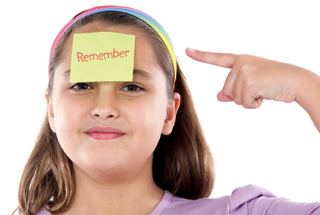
Remembering
     Recall previous learned information and recall relevant knowledge from long term memory.

Understanding
     State a problem in one's own words.


Applying
     Use a concept in a new situations or unprompted use of abstraction.


Analyzing
      Breaking the concept into parts and understand how each part is related to one another.

Evaluating
         Making judgments based on a set of guidelines and the value of ideas or materials. - judge, criticize and assess information using what you know to make decisions and support your views.

Creating
          Build a structure or pattern from diverse elements. Put parts together to form a whole, with emphasis on creating a new learning or structure. - putting information together in an innovative way.

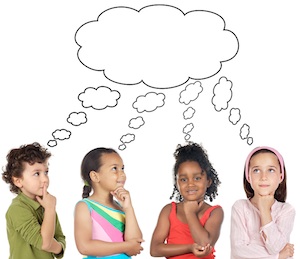
     The left brain is logical, good at decoding along the literal level of meaning. Individual analysis of images, events and ideas is what the left brain is good at. The right hemisphere of the brain takes care of synthesis, emotional expression, context within a bigger picture in order to create meaning. Instead of parts, it sees many things at once all.

        The structured problem solving-process known as 4D's also exemplifies the instructional shift in digital learning.

1) Define the problem
2) Design the solution
3) Do the work
4) Debrief on the outcome


Martes, Enero 19, 2016

Lesson 5 Preferences of Technology Generation

TEXT VERSUS VISUAL

  • Our parents read book texts, enriched by illustrations and photos. In order to research, they go to school library, use the cart catalog for needed books and sign up to borrow for home reading. The technology or digital generation has greater affinity to visuals compared with texts.

  LINEAR VERSUS HYPER MEDIA
  • The past 30 year old generation has obtained information in a linear logical and sequential manner. On the positive side, this has made them more logical, focused, and effective thinkers.

  INDEPENDENT VERSUS SOCIAL LEARNERS
  • The traditional education system gives priority to independent learning, prior to participate work. New learners, however, are already acquainted with digital tools that adopt both personal and participative work.

   LEARNER TO DO VERSUS TO PASS THE TEST
  • Old teachers teach students in order to help them to pass test and complete the course requirement. on the other hand, the new digital learner simply wish to acquire skills, Knowledge and habits as windows of opportunity afford them to learn.

     DELAYED REWARDS AND INSTANT GRATIFICATION
  • The traditional reward system in education consists in the grades, honor certificates / medals, and diplomas. On the other hand, digital learners on their own experience more immediate gratification through immediate scores from games.

      ROTE MEMORY VERSUS FUN LEARNING
  • Teachers feel obliged to delivering content based courses the learning of which is measurable by standard texts. Digital learners prefer for learning which is relevant and instantaneously useful to them . Learning i splay a new learners and not surprisingly there is much fun in the digital world outside the school.

Lesson 4 Bridging The Generation Gap


 GAP- The older generation often feels a generation  gap between them and the younger global, generation. This is apparent in simple things like the manner of dressing, socializing, more intimate relationships like` friendship and marrying etc. even in Education, traditional schooling has hardly changed even with  the clear evidence of a digital world.


GENERATION GAPS


  • Dressing  
  • Socializing   

  • Intimate relationships like friendship and marrying


  The new network of instantaneous communication is overcoming borders between countries and continents.
            Much of what elders believe may not be applicable anymore to the new generations, especially along matters of traditional value system.
  • Alvin Toffler's book, Future Shock, show how the information age has begun to create many cultural changes in the family, societies, businesses, governments such as what he calls throw- away society, modular man, kinetic image, scientific trajectory,fractured family, surfeit of sub- cults psychological dimensions.
  • Flow of information
  • Communication
  • Methods of Teaching

First, we need to understand the potentials of ICT
         
               OTHER GENERATION GAPS

              FLOW OF INFORMATION


             COMMUNICATION

                    METHODS OF TEACHING

                     DRESSING 

                    SOCIALIZING

           INTIMATE RELATIONSHIPS
                AND FRIENDSHIP

Lesson 3 Understanding Technology Learners

     
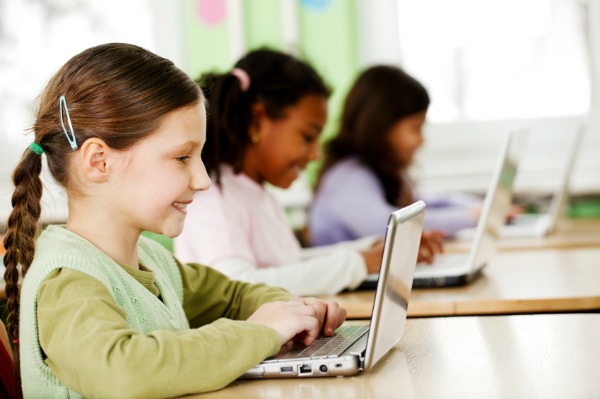
 Our Teachers today generally use the traditional education program applicable to Learners of th past, acquainted with linear, textual and sequential learning. They fail to realize that the new generation 21st millennium is the kind of learners that they were, but are information technology or digital learners.
   
       The 21st century education is going to be empowered by digital learners pretty soon as the is beginning is coming.


  • 53% of students use a smart phone and are concerned and prefer the internet.
  • 78% of the students believe and prefer  learning through technology.
         Even in classes, their concentration is questionable as they are uneasy to simply sit and listen.They become alive again through video presentations, group activities and computer classes.
         
        Information technology learners ( Digital Learners) - A video presentation is discussing the characteristics of a digital learner 


       21st Century Learning is done with:

  • COLLABORATION - learning how to work with others to achieved a common purpose. Students bring gadgets with them as well as presenting the knowledge the knowledge and abilities they have to come up with a product solution.


  • COMMUNICATION- Students use mobile devices to discuss content they are learning with others, set goals for themselves, and share new concepts. The Lines of communication now become multi- directional and extend beyond the classroom.


  • CRITICAL THINKING- helps to construct a firm foundation for personalized learning In many classrooms, teachers don't provide the time necessary for critical thinking in order to develop original solutions to problems, Many of the problems that are provided to students also have only one possible right or wrong answer don't encourage   true critical thinking.


  • CREATIVITY- Students make use of their imagination as well as technologies to create  new things to think beyond things.


Lesson 2 Overview Educational Technology 2

                         Educational Technology 2
  • Concerned with "Integrating Technology into teaching and learning"
  • Involved a deeper understanding  of the computer as well as hands on application of computer skills.
  • Aims to infuse in the students, teachers training, helping them to adopt and meet rapid continuing Technological changes particularly in global ICT environment.
  • Used information technology to improved not only instructional but the school management program and curriculum.


For learners:

                To introduces reinforce, supplement and extend knowledge and skills.


For Students Teacher and  Professional Teachers:
                To update their knowledge of Educational Technology.


                    Learning Objectives of Ed. Tech 2
  1. To provide education in the use of Technology in instructions.
  2. To impart learning experiences in Instructional technology supported instructional planning.
  3. To acquaint student on IT related learning theories with the computer as tutor.
  4. To learn to use and evaluate computer based on educational resources.
  5. To engage learners on Practical Technology integrated issues.
  6. To inculcate higher level thinking and creativity among students while providing them knowledge in IT related learning,
  
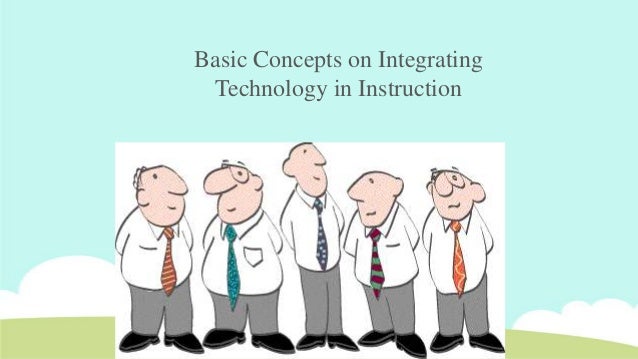
   Basic Concepts on Integrating Technology in Instruction

      Manifestation of Technology integration into instructions
  1. There's a change in a way classes are traditionally conducted.
  2. The quality instruction is improved in a higher level in such way could not have achieved without educational technology.
  3. There is planning by teacher on the process of determining on how and when technology fits into teaching and learning.
  4. The teacher set instructional strategies to address specific issues / problems.
  5. The use of technology provides the opening of opportunity to respond to these instructional issues / problems.
  6. Technology occupies a position in the instructional issues / problems.
      Levels of Integration
  1. Simple / basic Integration - Technology helps but it does not play pivotal role.
  2. Middle level Integration - There is a purposeful use of technology to support key learning areas.
  3. High level Integration - Technology is the central instructional tool center of teaching  learning process.

Lunes, Enero 18, 2016

Lesson 1 Review of Educational Technology 1


Educational Technology 1


           - is the application of technology in the educative process that takes place in education institution.


4 Phases of Application of Educational Technology in Teaching and Learning
  1. Setting of learning objectives.
  2. Designing specific learning experiences.
  3. Evaluating the effectiveness of the learning experiences.
  4. Revising teaching learning process for improving future instructional activities.


Technology Education
             - is the application of technology in the operational of educational institutions.


Instructional Technology
             - is refers to aspects of educational technology that are concerned with instructions.


Technology Integration
              - is using learning technologies to introduce supplement and extend skills.


        Roles of Technology in Learning
  1. Technology as tools to support Knowledge construction.
  2. Technology as intellectual partner to support learning by reflecting.
  3. Technology as social medium to support learning by conversing.
  4. Technology as information vehicles for exploring knowledge.
  5. Technology as context to support learning by doing.


Learning Objectives of Education Technology 1
  1. To orient the learner of Educational Technology in society.
  2. To lend familiarization on how educational technology can be utilize as media for teaching learning process.
  3. To uplift the learner of human learning through the use of learning technology.
  4. To impart skills in planning,designing,using and evaluating the technology enriched in teaching learning process impart knowledge and skills.
  5. To acquaint learners on basic aspects of community education.
  6. To introduce the learner to what is recognize as the third                                                                               revolution in education the computer.