
We will study here not just about what a computer is, we will know here what could be the capabilities of the computer in terms of using it as a tool in learning.

Constructivist was introduced by Piaget (1981) and Bruner (1990). They gave stress to knowledge discovery of new meaning/concepts/principles in the learning process. Various strategies have been suggested to foster knowledge discovery, among these, is making students engaged in gathering unorganized information from which they can include ideas and principles. Students also apply discovered knowledge applicable to real life situation.
While knowledge is constructed by the individual learner in constructivism, knowledge can also be socially constructed. Social constructivism this is an effort to show that the construction of knowledge is governed by social, historical and cultural contexts . In effect, this is to that the learner who interpret knowledge has a predetermined point of view according to the social perspectives of the community or society he lives in.
Learning Framework
|
Constructivism
|
Social Constructivism
|
Assumption
|
Knowledge is constructed by the individual.
|
Knowledge is constructed within a social context.
|
Definition of Learning
|
Students build their own learning.
|
Students build knowledge influenced by the social context.
|
Learning Strategies
|
Gather unorganized information to create new concept/principle
|
Exchange and share from ideas, stimulates thinking.
|
General Orientation
|
Personal discovery of knowledge.
|
Students discuss and discover meanings
|
Example
|
8*5-8+8+8+8+8
|
Two alternative job offers option 1-8 hrs/day for 6 days/week
Option 2-9 hrs/day for 5 days/week
|
The Computer's Capabilities
Given its present-day speed, flexibility and sophistication, the computer can provide access to information, foster creative social knowledge building, and enhance the communication of the achieved project package. Without the computer, today's leanings may still be assuming the tedious task of low-level information gathering, building and new knew knowledge packaging. But this is not so, since the modern computer can help teacher-and-students to focus on more high level cognitive tasks. Based on the two learning theories, the teacher can employ the computer as a/an:
* A communication tool
* A constructive tool
* As co-constructive tool
* A simulation tool
Informative Tool
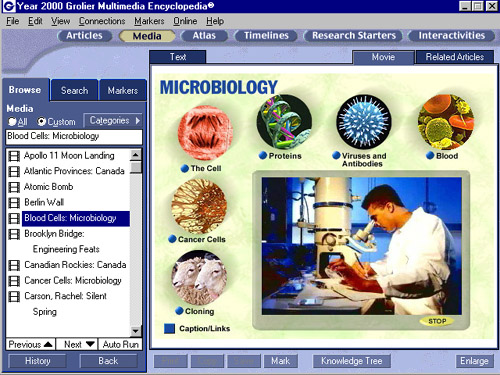
The computer can provide vast amounts of information in various forms, such as text, graphics, sound and video. Even multimedia encyclopedias are today available on the internet. The internet itself provides and enormous database from which user can access global information resources that includes the latest news, weather forecast, airline schedule, sports development, entertainment news and features, as well as educational information directly useful to learners. The internet on educational can be sourced for kinds of educational resources on the internet.

Constructive Tool
The computer itself can be used for manipulating information, visualizing one's understanding and building new knowledge. The Microsoft Word computer program itself is a desktop publishing software that allows uses to organize and present their ideas in attractive formats.

Co-constructive Tool
Students can use constructive tools to work cooperatively and construct a shared understanding of new knowledge. On ways of co-constructive is the use of the electronic whiteboard where students may post notices to a shared document/whiteboard. Students may also co-edit the same document from their homes.

Situating Tool
By means of virtual reality (RS) extension systems, the computer can create 3-D images in display to give the user the feeling that are situated in a virtual environment . A flight simulation program is an example of situating tool.

Walang komento:
Mag-post ng isang Komento